
With the overall from 2023 to 2033, it’s clear that the demand for these two occupations is growing at an incredible speed.
Despite that, many people still use the terms web design and web development interchangeably. While these two fields complement each other significantly, the skill sets, responsibilities, and tools of web designers and developers are completely different.
Whether in charge of a custom healthcare software development company or a FinTech startup, understanding the distinction between these two fields is essential for making the right business decisions. This article will highlight the job descriptions of both website designers and website developers, helping you hire the right professional.
1. What is web design?
Website design is the first phase of website creation. Its focus is on creating websites that look good, work well, and hook users with unique functionalities. While web designers are tasked with creating visually appealing websites, their job goes far beyond that.
These professionals must be proficient in programs like Figma and Adobe XD to create wireframes, which are blueprints of a site. They also need to be experts in design fundamentals, such as:
Typography: Typography is the most important element of visual communication because it is the textual content users will first encounter.
Color theory: There’s nothing more efficient for awakening emotions in visitors than colors. They are also indispensable tools for communicating a brand’s message, as colors help create a cohesive look.
Layout: The most user-friendly websites have great layouts, which is something that web designers create.
Hierarchy: Not all elements of web design are equally important, and hierarchy ensures the most important ones are highlighted.
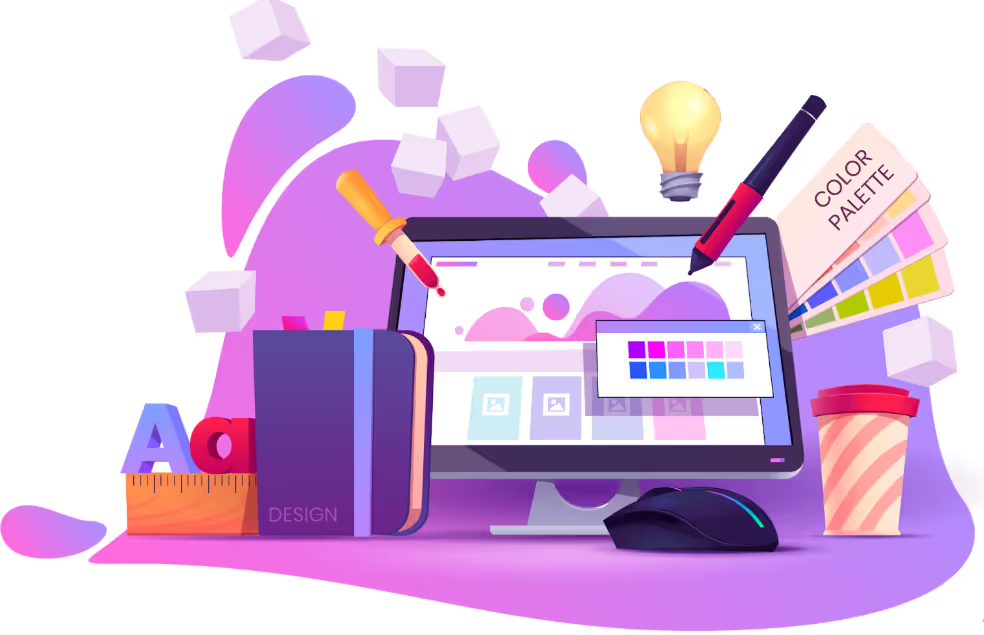
Types of web designers
If you decide to hire web designers, you should learn the difference between three different types of designers. These are:
- UX designers: Charged with creating a positive user experience (UX), UX designers focus on making the website intuitive for users. By using behavior analytics tools like Hotjar, they can collect website data and make it enjoyable to use.
- UI designers: These designers prioritize user interface (UI) over other elements, such as website layout. They make decisions with a focus on people’s interaction with the site, boosting the site’s conversions.
- Visual designers: Visual designers are not to be confused with Visual designers focus on web and app interface design. They use a mix of UX and UI when creating user-friendly and intuitive websites.
Web designers always come in handy, but they are crucial when a business wants to establish a strong online presence. Creating a unique brand presence is best achieved through the power of web design and the visual elements it encompasses.
What is web development?
Web development is the process of constructing the website itself. These professionals translate designs into code and instruct the website on how to work. They lay the foundation for a strong and sound website by using programming languages like PHP, Ruby, and Java.
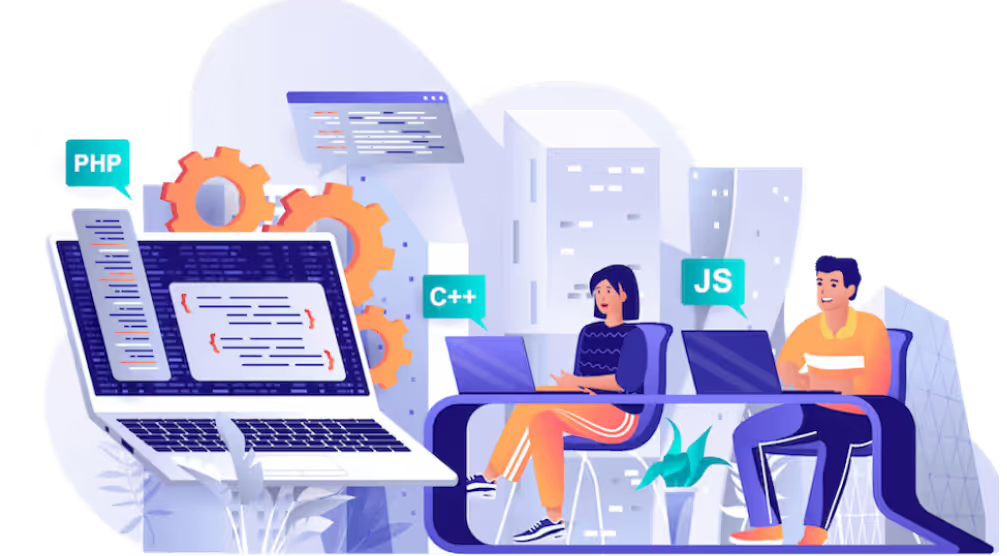
As people in charge of the technical aspect of website creation, web developers have to write efficient code, test & debug it, and maintain software documentation.
Types of web developers
Whether you are about to and need some web development services or are looking for a custom healthcare software development company to help develop your healthcare product, know that there are two types of web developers you can hire. These are:
- Front-end developers: Tasked with the ‘client-side’ of the website, front-end developers focus on building the visible elements of a website. They mostly use CSS, HTML, and JavaScript to accomplish the task.
- Back-end developers: Also referred to as ‘behind the scenes’ workers, back-end developers focus on building the core structure of the website. When it’s essential to test their knowledge in advanced programming languages such as SQL, as it’s their main tool for coding a website’s database and server.
You can also which combine the skills of front-end and back-end developers. Full-stack developers have skillsets that make them more adaptable, but they usually lack in-depth knowledge of developers who specialize in one type of web development is a good idea in any scenario, but it’s particularly important when trying to scale your business and add special functionalities to your website. Web developers will assess how your site works and look for areas of improvement, fixing any problems they find.
1. Attracts the Readers’ Attention
With thousands of new websites being created every day, users are faced with the job of choosing the finest. This means that your website must be appealing to the eye, or you will lose visitors. To accomplish this, you must be careful in your UI and UX design.
Theme color, photos, videos, and words are just a few of the characteristics that have been evaluated. Basically, the user interface and user experience (UI and UX) should impress people even before they dive into the content. This, however, may be difficult work for you. That is, you should get assistance from a reputable site designer.
Expert Assistance to Create State-of-the-Art UI & UX for Your Website! The Dot Com Infoway Basically, the user interface and user experience (UI and UX) should impress people even before they dive into the content. To build the finest layouts for your website, the UI/UX team follows the newest design trends.
2. Increase the Conversion Rate
Businesses create websites for a variety of purposes, one of which is to attract more users and clients. To accomplish this, web designers are supposed to create a fantastic user interface. The interface is anticipated to include a call-to-action in this case.
Essentially, a good UI/UX should feature call-to-action buttons at strategic locations throughout the website. For example, after offering a product description, you can include a call to action. This button allows you to encourage people to buy your products.
3. Maximize Resource Utilization
You’re bound to get into difficulty if you make a site’s user interface in a hurry. Remember that you rely on your users to get the results you want. The site will need to be maintained and upgraded on a regular basis, which will be one of the obstacles you will face.
As a result, you’ll be forced to spend more money than you planned. Fortunately, if your website has a strong user interface, you won’t have to deal with any of these issues.
It will be a matter of spending in the early phases and doing tests for you. You also lower the chances of the site crashing or failing to react.
4. Obtain a Good Flow
The most popular websites are distinguished by a logical flow of content. It is prudent to take your time while creating the user interface to ensure that the workflow is correct. This requires structuring the content in such a way that the readers are not confused.
You may believe that you have the best flow, but this is not always the truth. For this reason, startup websites are expected to have put their best foot forward when it comes to building UI.
- Conclusion
As previously said, there are numerous advantages to having a great user interface (UI) and user experience (UX). The ball is now in your court to find the proper team with the necessary knowledge to assist you with this essential and important work. You’ll only be able to get the above-mentioned benefits if you do it in this manner.