
Every website you visit is made up of different sections, beautiful elements, and complex design choices. But the interface you see is built on a carcass behind the scenes.
How to Hire a Backend Developer: All the Information at One Place
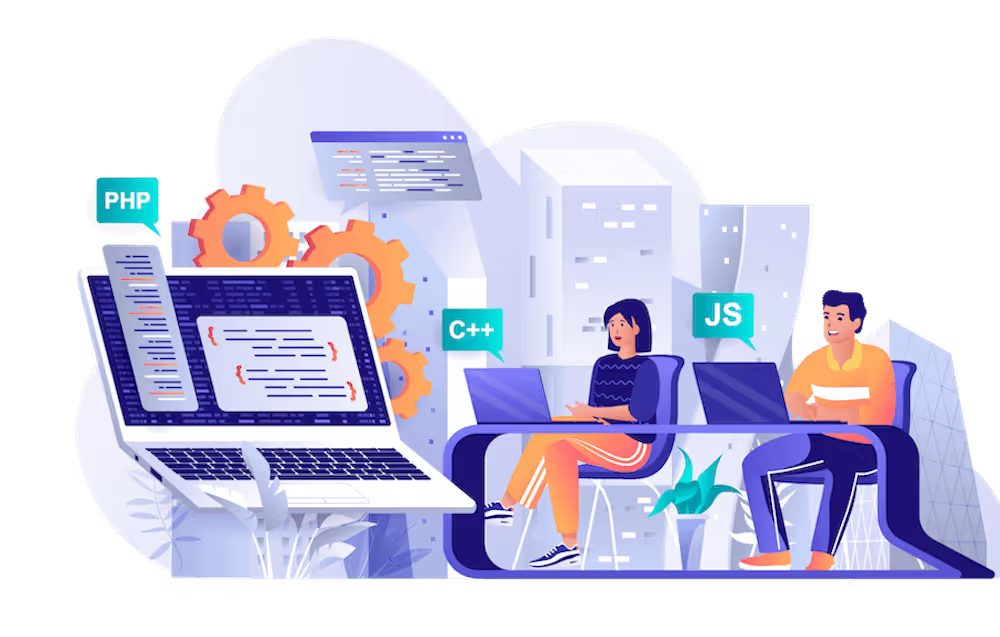
Every website you visit is made up of different sections, beautiful elements, and complex design choices. But the interface you see is built on a carcass behind the scenes. Users are not allowed to see it or interact with it. Because it`s meant for the internal use of the company that owns the website, this part is the heart of any web application, and without it, the website can not function properly. That`s what the back end is about. Many you find online focus only on the surface of the site. This guide will help you understand what to look for in your next back-end developer.
1. What is a back end development?
Back end development refers to the part of software development and that focuses on the server side of applications. It involves creating and maintaining the technology, logic, and infrastructure that power the front end (the part users interact with directly). Back end development ensures that everything works behind the scenes to deliver a seamless user experience. Consider and experienced back end developer if you want to build a beautiful interface for your website.
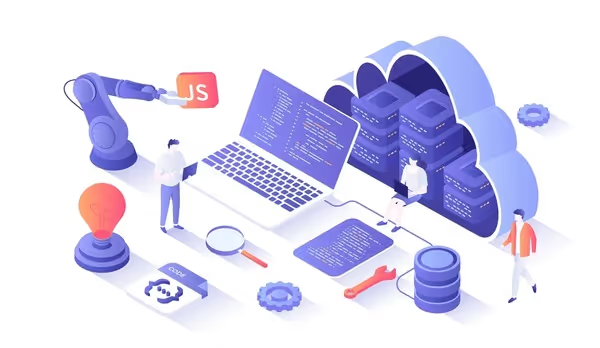
Back end web developers create the logic behind the interface. They create the infrastructure that ensures the proper work of the web application. They focus on what users don’t see—the underlying logic, databases, APIs, and server configurations that make everything function smoothly. For startups wondering back end developers play a pivotal role in ensuring the application runs efficiently, is secure, and scales well with an increasing number of users.
2. What tools and technologies should back end developers must know how to use?
- Programming Languages for back end Development:
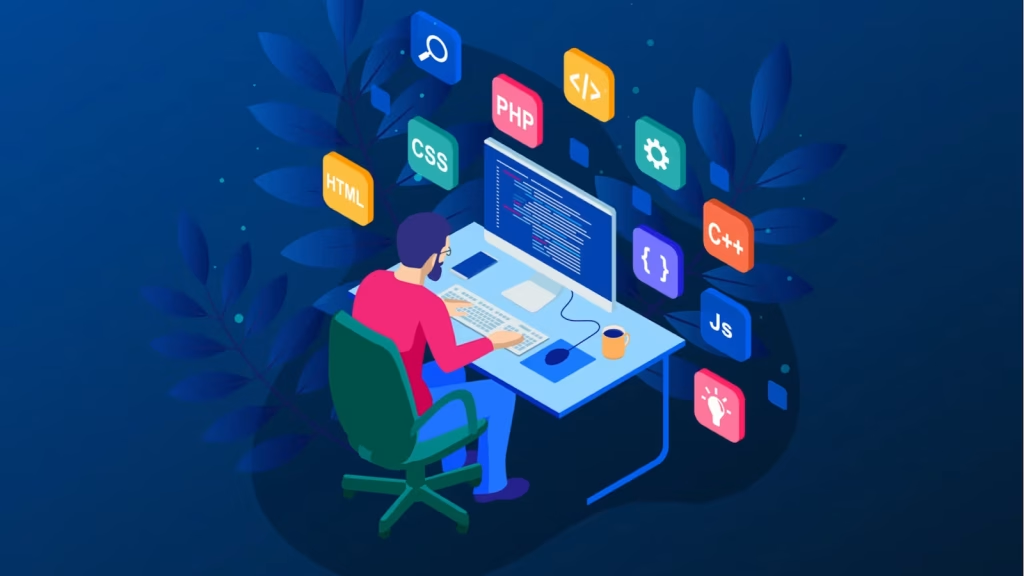
Programming languages are essential tools for software developers working in back end development, enabling them to create powerful systems that power web applications and mobile apps. Skilled back end developers use various back end programming languages to handle complex data structures, manage databases, and ensure efficient server-side operations.
A deep understanding of these programming languages is crucial for building scalable systems that deliver impressive solutions in any software development life cycle.
Java
Java is a powerful programming language widely used in back end development due to its reliability and scalability. It is favored by software developers and back end engineers for creating complex projects such as web applications, enterprise-level systems, and APIs. Its “Write Once, Run Anywhere” (WORA) capability ensures portability, making it indispensable for managers overseeing a project.
Frameworks like Spring Boot and Hibernate streamline the product process, helping skilled back end developers build systems that support complicated data systems with powerful security and performance. Java is often mentioned in conversations about the flexibility of the language allows to create any custom solution.
Python
FPython is a top choice for back end developers due to its simplicity, versatility, and extensive ecosystem. It is widely used for tasks like database management, implementing application programming interfaces, and building web applications. For those considering how much does it cost to hire an app developer, Python’s efficiency and extensive library support make it a cost-effective choice for many projects.
Frameworks such as Django and Flask provide solutions for full-stack developers looking to create secure and scalable systems. With its clean syntax and rich library support, Python is perfect for handling more complex projects and enhancing the software development lifecycle.
PHP
PHP is a veteran in back end development and remains a preferred programming language for building dynamic websites. Its integration with HTML and frameworks like Laravel and Symfony make it a popular choice for freelance back end developers and teams looking to create complicated data systems efficiently. Companies aiming to hire a back end developer often turn to PHP developers to manage application programming interfaces, session handling, and database integration.
Version Control
MEveryone talks about this one, but no one actually explains it. Version control is the ability of the developer to look at the different versions of the code and apply changes to each and every one of them. Imagine that the website is a pie; you can add sugar to the frosting, or you can go back in time and add this ingredient to the cream. That`s version control.
A skilled back end developer understands the levels of the code and can create changes in different versions of it. There are different tools to perform version control, here are the most popular ones.
Git
Git is an essential tool for back end developers, enabling efficient version control and collaboration in software development projects. It allows developers to track changes in code, manage different branches for features or fixes, and revert to previous versions when needed. By maintaining a history of code changes, Git ensures transparency and accountability, making it easier to debug issues and understand the evolution of a project which was done with.
It is a distributed version control system, meaning every developer has a full copy of the repository, providing redundancy and enabling offline work. With Git, developers can work on features independently, merge changes seamlessly, and resolve conflicts effectively, fostering smooth collaboration in team environments.
Gerrit
Gerrit is a web-based code review and collaboration tool built on top of Git, making it a powerful choice for managing version control in back end development projects. It facilitates a structured and collaborative code review process by allowing developers to submit code changes (patches) for review before merging them into the main codebase.
Gerrit’s review workflow helps maintain code quality, as reviewers can comment on specific lines of code, suggest improvements, and ensure adherence to coding standards. This tool is particularly useful in large-scale back end development teams where rigorous reviews are critical to maintain the integrity and performance of the back end systems.